


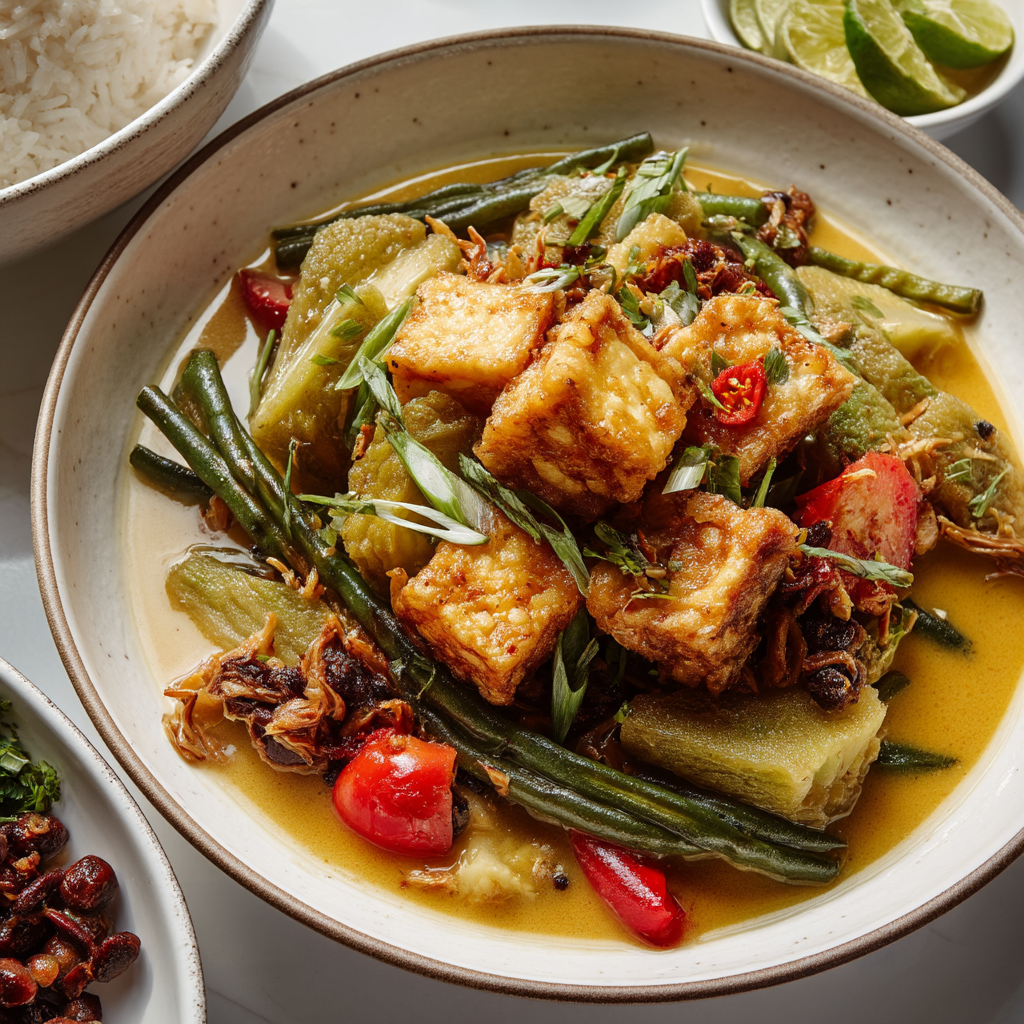
Coconut-Braised Sayote Filipino Vegetarian Dinner with Crispy Tofu
Recipe Overview
Dish Name: Coconut-Braised Sayote with Crispy Tofu and Fermented Black Beans Cuisine: Filipino | Category: Vegetarian Course | Serves: 4 Prep Time: 25 minutes | Cook Time: 35 minutes | Total Time: 60 minutes
Why This Works
This Filipino vegetarian dinner solves the plant-based protein problem without mimicking meat. We’re taking the traditional ginataang technique and applying it to sayote (chayote squash), then layering in twice-fried tofu for textural contrast and Filipino tausi (fermented black beans) for the umami depth that makes you forget about animal protein entirely. The coconut milk doesn’t just add richness, it becomes the sauce base that ties crispy, creamy, and tender elements together. This isn’t a side dish pretending to be dinner. It’s a legitimate main course that happens to be entirely plant-based, with enough complexity and substance to anchor an evening meal.
Ingredients (Serves 4)
For the Crispy Tofu:
- 400g firm tofu, pressed and cut into 2cm cubes
- 30ml neutral oil for frying
- 15g cornstarch
- 5g sea salt
For the Coconut Braise:
- 400ml full-fat coconut milk (first press)
- 200ml vegetable stock
- 3 medium sayote (chayote), peeled, quartered, seeds removed
- 150g long beans, cut into 5cm pieces
- 100g oyster mushrooms, torn into strips
- 40g tausi (fermented black beans), rinsed and roughly chopped
- 4 cloves garlic, minced
- 1 medium white onion, sliced thin
- 30g ginger, julienned
- 2 Thai chilies, sliced (adjust to taste)
- 20ml coconut vinegar
- 15ml soy sauce
- 10g palm sugar
- 3 bay leaves
- Fresh calamansi or lime for finishing
- 20g patis (fish sauce alternative: additional soy sauce if strict vegetarian)
For Assembly:
- 100g fresh tomatoes, diced
- 30g green onions, sliced on bias
- 20g cilantro leaves
- Steamed jasmine rice for serving
Method
Mise en Place (25 minutes)
Press tofu between clean kitchen towels weighted with a heavy pan for 15 minutes. Cut all vegetables to specified sizes. Rinse tausi thoroughly under cold water to remove excess salt, then chop. Measure all liquids. Have cornstarch in a wide bowl for dredging. You need a large, deep sauté pan or braising pan with a lid, plus a separate frying pan for tofu.
First Fry the Tofu (8 minutes)
Toss pressed tofu cubes in cornstarch and salt until evenly coated. Heat neutral oil in a wide pan over medium-high heat until shimmering. Fry tofu in a single layer without crowding, turning every 2 minutes until golden on all sides. Remove to paper towels. This first fry sets the exterior. The tofu won’t be fully crispy yet, that comes later.
Build the Aromatic Base (6 minutes)
In your braising pan over medium heat, add 15ml of oil. Sauté onions until translucent, about 3 minutes. Add garlic, ginger, and Thai chilies. Cook until fragrant but not browned, roughly 2 minutes. Add tausi and toast for 1 minute to bloom the fermented funk. This layering of aromatics creates depth that straight braising cannot achieve.
Begin the Coconut Braise (12 minutes)
Add sayote quarters to the aromatic base. Stir to coat with the aromatics. Pour in coconut milk and vegetable stock. Add bay leaves, palm sugar, soy sauce, and patis. Bring to a gentle simmer, then reduce heat to medium-low. The liquid should bubble softly around the edges. Cover and braise for 10 minutes until sayote is tender but still has bite. You want fork-tender, not mushy.
Add Secondary Vegetables (5 minutes)
Add long beans and torn oyster mushrooms to the braising liquid. Stir gently to submerge. Cook uncovered for 5 minutes. The mushrooms will release moisture and concentrate the sauce slightly. The long beans should be tender-crisp. Taste the braising liquid now, it should be rich, savory, and balanced between sweet and salty.
Second Fry and Finish (4 minutes)
While vegetables finish, reheat your frying pan with fresh oil over high heat. Fry the par-cooked tofu again until deeply golden and crispy, about 2 minutes per side. This double-fry technique is critical for texture that survives the sauce. Add coconut vinegar to the braising pan and stir. Remove from heat. Add fresh tomatoes, they’ll soften from residual heat without turning to mush.
Plating and Assembly
Divide steamed jasmine rice among four wide bowls. Ladle the coconut-braised vegetables over rice, ensuring each serving gets sayote, long beans, and mushrooms. Top with crispy tofu cubes. Garnish with green onions and cilantro. Serve with calamansi wedges on the side for squeezing. The acid cuts through the coconut richness and is non-negotiable.
What You Need to Know
The double-fry technique on tofu is what separates amateur from professional execution. The first fry sets structure, the second creates the crust that stays crispy even when hit with sauce. Skip the cornstarch coating and your tofu turns soggy within minutes.
Coconut milk breaks if boiled aggressively. Keep it at a bare simmer. If you see large bubbles, your heat is too high and you’ll get an oily, separated sauce instead of the creamy emulsion you want.
Tausi intensity varies wildly by brand. Start with the specified amount, taste, adjust. Some brands are intensely salty and funky, others are milder. Rinsing is essential regardless, or you’ll oversalt the entire dish.
Make-ahead works well here. Braise the vegetables completely, store separately from tofu. Fry tofu fresh before serving. Reheat the braise gently, add tofu at the last moment.
The Result
You get multiple textures in every bite: creamy coconut sauce, tender-crisp vegetables, and tofu with a shatteringly crisp exterior giving way to silky interior. The fermented black beans provide funky, complex umami that reads as deeply savory without any animal products. The sayote absorbs the braising liquid while maintaining its subtle sweetness and crisp texture. Fresh herbs and calamansi at the end bring brightness that prevents the coconut from feeling heavy. This is a complete, satisfying Filipino vegetarian dinner that stands on its own merit, not as a compromise.
Nutrition Information Based on a 2,000 Calorie Diet (Per Serving)
| Nutrient | Amount | % Daily Value |
|---|---|---|
| Calories | 485 kcal | 24% |
| Total Fat | 32g | 41% |
| Saturated Fat | 22g | 110% |
| Cholesterol | 0mg | 0% |
| Sodium | 890mg | 39% |
| Total Carbohydrate | 38g | 14% |
| Dietary Fiber | 7g | 25% |
| Total Sugars | 9g | – |
| Protein | 16g | 32% |
| Vitamin D | 0.8mcg | 4% |
| Calcium | 245mg | 19% |
| Iron | 4.8mg | 27% |
| Potassium | 785mg | 17% |
Flavor Balance
Sweet (5/10): Palm sugar and coconut milk provide natural sweetness that balances the fermented funk. Sayote adds subtle vegetal sweetness without reading as sugary. The sweetness supports rather than dominates.
Salty (7/10): Tausi, soy sauce, and patis create layered salinity. The fermented black beans provide salt with complexity rather than one-dimensional sodium hit. Critical for balancing the coconut’s richness.
Sour (4/10): Coconut vinegar in the braise and fresh calamansi at service cut through fat and refresh the palate. The acidity is present but restrained, allowing the coconut and fermented flavors to shine.
Bitter (2/10): Minimal bitterness from bay leaves and slight char on tofu exterior. Not a primary flavor component but adds subtle complexity in the background.
Umami (8/10): This is where the dish excels. Fermented black beans, mushrooms, soy sauce, and patis create profound savory depth. The umami makes this Filipino vegetarian dinner feel complete and satisfying without meat.
Wine Pairing
1. Technical Match
Weight: This is a medium-full bodied dish. The coconut milk adds richness and viscosity, while the vegetables maintain freshness. You need a wine with enough body to match the coconut fat without overwhelming the delicate sayote and long beans. Light wines disappear, heavy wines dominate.
Acid Balance: The dish has moderate acidity from coconut vinegar and calamansi, but the coconut milk creates a rich, slightly sweet base. You need bright acidity in the wine to cut through the fat and refresh between bites. Low-acid wines turn flabby against this dish.
Tannin Interaction: Minimal protein and fat from tofu means aggressive tannins have nothing to grip. The coconut milk’s fat content can handle some tannin, but grippy, tannic reds will taste harsh. Soft tannins or white wines work best.
Serving Temperature: Whites at 10-12°C, light reds at 14-16°C. The coconut’s richness benefits from cooler serving temperatures that provide contrast and refresh the palate.
2. Flavor Architecture
Primary Bridge: Coconut’s tropical character connects beautifully with fruit-forward Australian wines. Look for stone fruit, melon, and citrus notes that echo the dish’s Southeast Asian profile without competing with fermented black bean funk.
Complementary Elements: The fermented tausi and umami-rich mushrooms need wines with savory, textural elements. Wines with lees contact, skin contact, or slight oxidative character complement rather than clash with fermentation flavors.
Regional Logic: While this is Filipino food, Australian wines’ ripe fruit and New World generosity match the dish’s bold flavors better than restrained Old World options. The heat and sunshine in Australian wines mirrors tropical Filipino ingredients.
Common Mistakes: Avoid oaked Chardonnay (competes with coconut richness), high-alcohol reds (overwhelm vegetables), and bone-dry wines (clash with palm sugar’s sweetness). Herbaceous Sauvignon Blanc fights with cilantro and creates metallic notes against fermented beans.
3. Recommendations with Scoring
Primary Pairing: Australian Grüner Veltliner (Adelaide Hills or Canberra District)
Intensity Match: 8/10 Flavor Harmony: 9/10 Texture Interaction: 8/10
Why: This is an unconventional but brilliant match. Australian Grüner has the white pepper spice and citrus zest to complement Thai chilies and calamansi while maintaining enough body to handle coconut milk. The variety’s natural savory character (sometimes described as lentil-like) bridges beautifully with fermented black beans without creating umami overload. The wine’s crisp acidity cuts through richness while its stone fruit notes connect with the dish’s subtle sweetness. It’s food-friendly enough to let vegetables shine while complex enough to match the dish’s fermented funk.
Specific Producers: Shaw + Smith (Adelaide Hills), Clonakilla (Canberra District), Mount Majura Vineyard (Canberra District)
Alternative 1: Australian Fiano (McLaren Vale or Langhorne Creek)
Intensity Match: 8/10 Flavor Harmony: 8/10 Texture Interaction: 9/10
Why: Fiano’s textural richness from lees contact creates a creamy mouthfeel that mirrors coconut milk without adding competing flavors. The variety’s characteristic almond and white flower notes complement tofu’s subtle soy character and sayote’s delicate vegetal quality. Good acidity balances richness while stone fruit and herbal notes tie into the dish’s complexity. The wine’s medium body matches the dish perfectly, neither overwhelming vegetables nor disappearing against coconut fat.
Specific Producers: Coriole (McLaren Vale), Luke Lambert (Yarra Valley), Ministry of Clouds (McLaren Vale)
Alternative 2: Australian Pinot Gris (Mornington Peninsula or Tasmania)
Intensity Match: 7/10 Flavor Harmony: 7/10 Texture Interaction: 8/10
Why: Pinot Gris from cooler Australian regions offers pear and ginger spice notes that echo the dish’s aromatics. The variety’s natural texture and weight handle coconut milk effectively while maintaining enough freshness to cleanse the palate. Less overtly fruity than Pinot Grigio styles, these wines have subtle complexity that doesn’t compete with fermented flavors. The gentle phenolic grip from skin contact (in some examples) provides structure that tofu’s protein can interact with pleasantly.
Specific Producers: Ten Minutes by Tractor (Mornington Peninsula), Moorilla (Tasmania), Tolpuddle (Tasmania)
HACCP-Compliant Storage and Safety
Cooling Procedures
- Cool cooked components from 60°C to 21°C within 2 hours, then from 21°C to 5°C within an additional 4 hours
- Divide large batches into shallow containers (5cm depth maximum) to accelerate cooling
- Do not cover containers until food reaches 21°C to allow heat escape
- Store tofu and vegetable braise in separate airtight containers
Refrigeration Guidelines
- Store coconut braise at 0-4°C for maximum 3 days
- Store fried tofu separately at 0-4°C for maximum 2 days
- Keep raw vegetables at 0-4°C and use within 5 days
- Store cooked rice at 0-4°C for maximum 24 hours
Freezing Guidelines
- Freeze coconut braise (without tofu) at -18°C or below for maximum 2 months
- Do not freeze fried tofu, texture degrades significantly
- Freeze in portion-sized containers with 2cm headspace for expansion
- Label with contents and freeze date
Reheating Procedures
- Reheat coconut braise to minimum internal temperature of 75°C for at least 15 seconds
- Use stovetop over medium heat, stirring frequently to ensure even heating
- Verify temperature with probe thermometer in thickest portion
- Do not reheat more than once
- Fry tofu fresh or reheat in oven at 200°C for 5-6 minutes until crispy
Disposal Guidelines
- Discard any food held in temperature danger zone (5-60°C) for more than 2 hours cumulative time
- Discard refrigerated components after maximum storage times listed above
- Discard any food showing signs of spoilage: off odors, discoloration, mold, or slimy texture
- Discard coconut milk if separated and cannot be re-emulsified with stirring
